



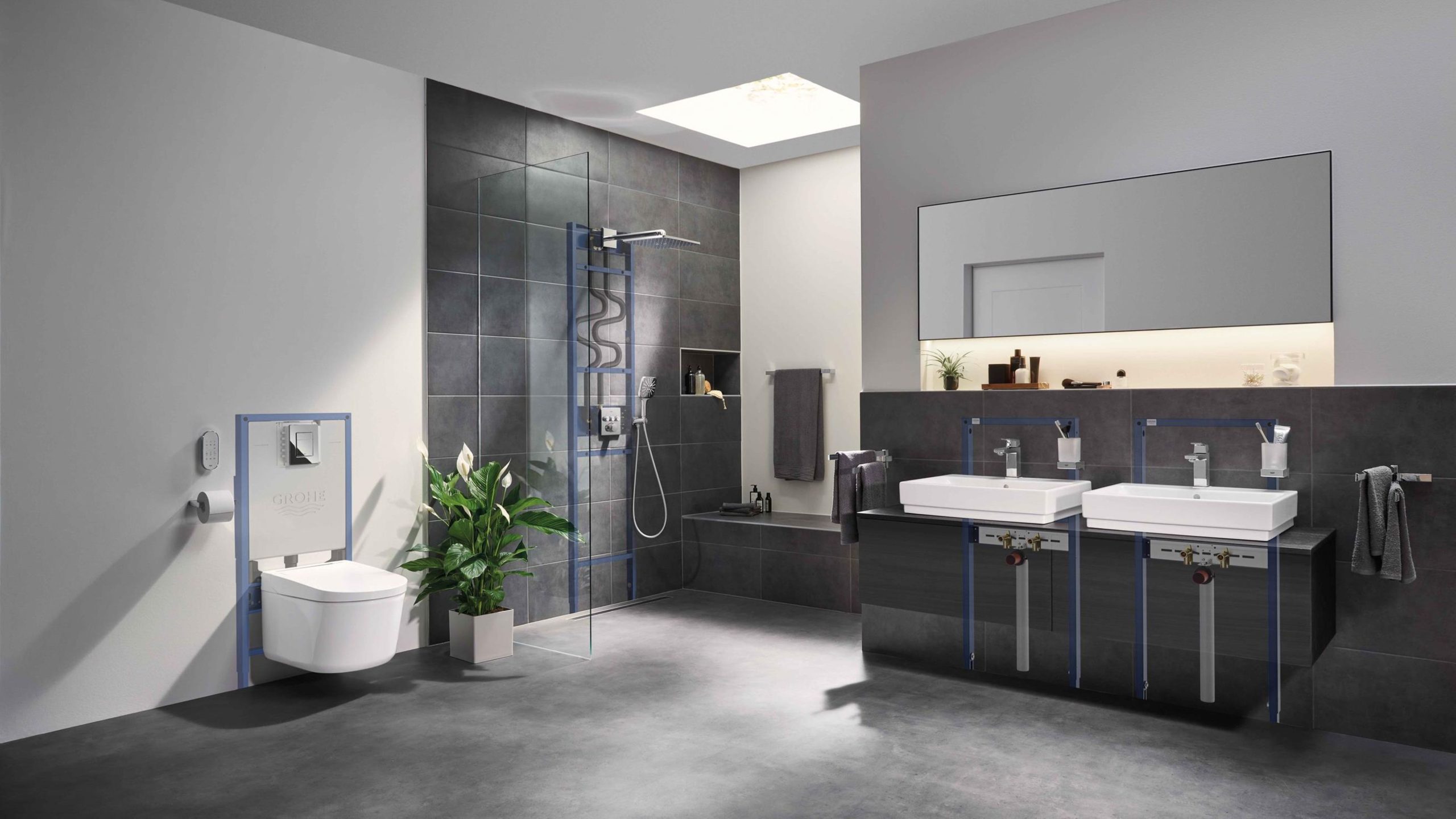
Technology has transformed almost every part of the home, but its most meaningful impact is not always the most visible. In the bathroom and kitchen, technology is increasingly becoming part of the infrastructure and experience of everyday life, shaping how people interact with water, how efficiently systems operate and how spaces adapt to changing needs.
For consumers across the GCC, this evolution is particularly relevant. The region has some of the world’s most advanced residential, hospitality and mixed-use developments, while consumers are accustomed to high levels of service, personalization, and convenience. These expectations are increasingly moving from hotels and premium developments into the home.
The question, therefore, is no longer whether technology belongs in the bathroom. It is how technology can make the experience better without making it more complicated. At GROHE, technology has always been one of the values of the brand, alongside quality, design, and sustainability. The objective is not to add technology simply because it is available, but to use engineering to make water experiences more intuitive, precise, and responsive to the people using them.
This distinction matters. The most effective technology is the one that becomes almost invisible. A shower control, for example, should not require a technical understanding to operate. Intuitive controls can allow users to select different shower functions, adjust water temperature and personalise their experience with minimal effort. Behind that simplicity is engineering that needs to deliver consistent performance every time.
This principle is increasingly visible in premium showering. GROHE SPA solutions such as Grohtherm Aqua Tiles combine concealed technology with modular design, allowing users to create more personalised shower experiences while giving architects and designers greater flexibility in how the system is integrated into a space.
The technology becomes part of the architecture rather than an interruption to it. This is also where the relationship between technology and design becomes important. Consumers are no longer necessarily looking for technology that looks technological. They want products that fit naturally into their homes, complement their interiors, and remain relevant as design preferences evolve.
Long-term performance is therefore becoming a more important measure of innovation.
A product may be impressive when it is first installed, but its real value is determined by how reliably it performs over years of everyday use. This is particularly important in the GCC, where premium residential and hospitality environments place high expectations on durability, comfort, and ease of maintenance.
The same thinking applies to water management.
Technology can help move water use from something people simply consume to something they can better understand and manage. Intelligent monitoring solutions, for example, can identify patterns of water use and alert homeowners to potential leaks. This creates an opportunity to address issues earlier and make resource use more visible.
In the kitchen, technology is similarly changing the relationship between convenience and water. Systems such as GROHE Blue https://www.grohe.com/en-AE/product/for-your-kitchen/watersystems/grohe-blue-homebring filtered, chilled, and sparkling water directly to the tap, integrating several functions into a single solution while reducing the need for bottled water as part of everyday routines.
These examples point to a broader shift: the future of technology in the home is not necessarily about adding more devices. It is about creating better systems. This is particularly relevant as sustainability becomes increasingly connected to performance. Water efficiency, durability and responsible resource use cannot be treated separately from the experience of the consumer. The challenge for manufacturers is to develop solutions that deliver both; without asking consumers to compromise on comfort, design, or convenience.
For the GCC, this balance will become increasingly important as the region’s-built environment continues to evolve. New developments are being designed around increasingly sophisticated expectations, while existing homes and hospitality assets are being renovated to meet them. Technology has a role in both environments, but only when it is designed with the full lifecycle of the space in mind.
The next generation of bathroom and kitchen technology will therefore not be defined simply by how connected or advanced a product is. It will be defined by how effectively it solves a real need, how naturally it integrates into people’s lives and how well it continues to perform over time. That is where engineering becomes more than a technical discipline. It becomes a way of designing better everyday experiences.
For GROHE, the opportunity is to continue bringing technology and design together in ways that anticipate how people will live, rather than simply responding to how they live today. In a region where expectations are moving quickly, the most valuable innovation will be technology that is ready for the future while remaining remarkably simple to use today.
By Stefan Schmied, Leader IMEA, LIXIL International http://linkedin.com/in/stefan-schmied-9804a01