



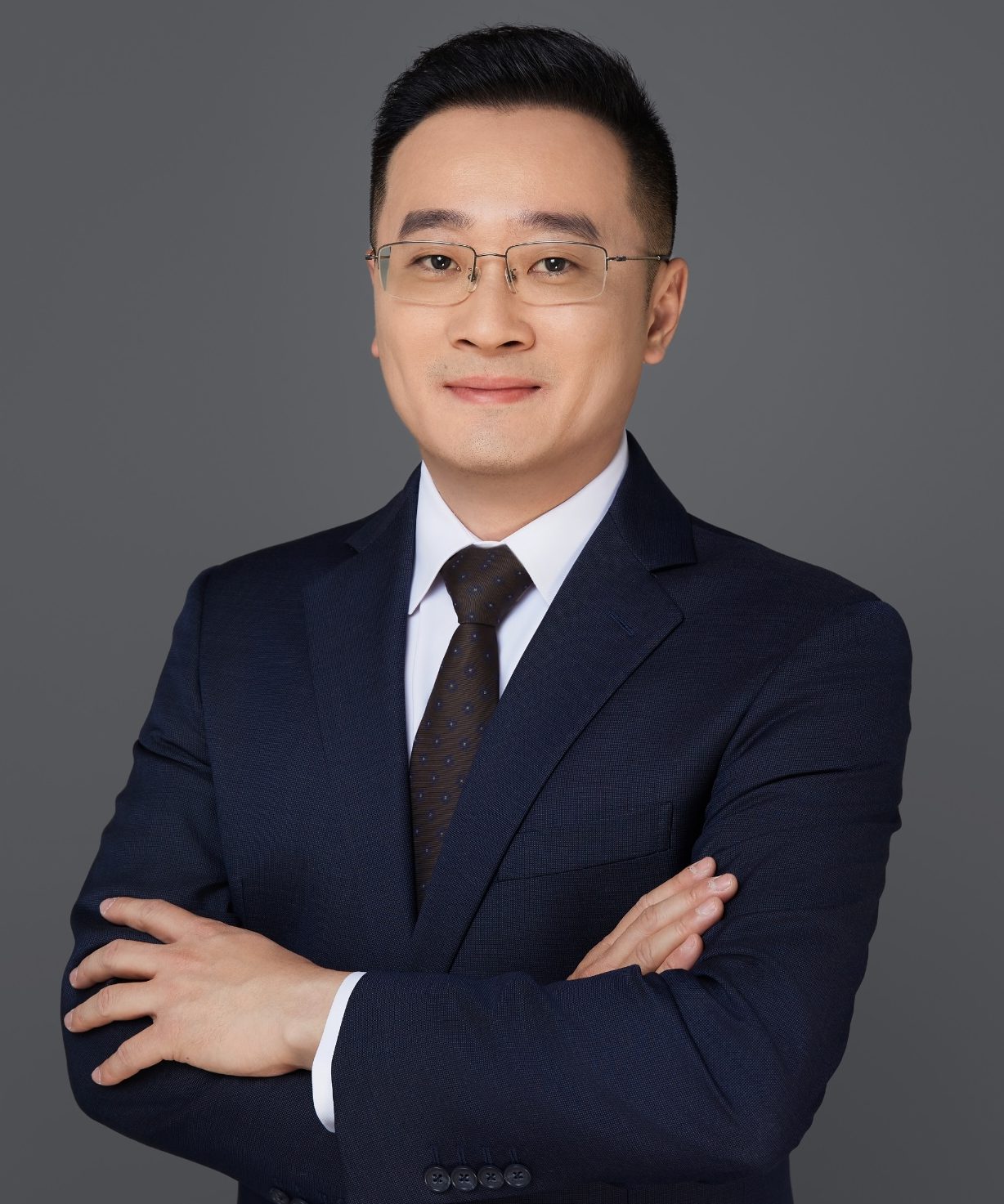
During the PV Innovation Summit held by Huawei Digital Power in Dubai in November 2025, Middle East Solar Industry Association (MESIA) conducted an interview with Mr. Alex Xing, President of Huawei Digital Power Smart PV & ESS Business in the ME&CA regions. As global power systems enter an era of high renewable energy penetration, the discussion focused on two critical themes shaping the future of the energy transition: high-quality, long-term reliability of PV and energy storage systems, and the role of grid-forming technology in maintaining power system stability. Through this discussion, Huawei shared its perspective and practical experience on how renewable energy can evolve from a supplementary source to becoming the main power supply.
- Alex, you highlighted high quality is the cornerstone of Huawei Digital Power. How does this principle translate into real-world reliability for PV and ESS systems, especially under high renewable penetration?
Quality is the foundation of everything we deliver. For us, high quality is not a slogan or a certification, it is a long-term philosophy that guides how we design products, manage risk, and support our customers throughout the entire lifecycle of PV and energy storage systems.
Our PV inverters have maintained an industry-leading annual failure rate of below 0.5% for ten consecutive years, and some projects—like Qinghai Golmud—have achieved less than 0.1% over a decade. These long-term results demonstrate how quality directly translates into reliability in real operating conditions.
Huawei applies a Cell-to-Grid Five-Layer Safety architecture, backed by some of the world’s most rigorous energy-storage safety tests. Many systems can’t handle multiple cells overheating, but Huawei’s pack design makes sure no flames appear. This design approach ensures that risks are contained and do not escalate, even under extreme conditions.
High quality ensures long-term stability, reduces O&M risks, and allows countries to confidently integrate more wind and solar as main power. As renewable penetration increases, this level of reliability and safety becomes essential for maintaining stable and secure power systems.
- The world is entering a high-penetration renewable era. How does Huawei’s all-scenario grid-forming technology help solve global grid stability challenges?
High penetration brings two major challenges—high volatility and weakened grid strength. As renewable penetration increases, these challenges become more evident and directly affect the stability of power systems.
Our all-scenario grid-forming solution addresses the volatility of renewables by providing virtual inertia and active voltage support. This has been proven at scale in the Red Sea project, where we successfully created a stable ‘island’ grid powered 100% by solar and storage.
In such projects, renewable systems are required to operate under demanding conditions and still maintain stability. The successful application in these benchmark projects demonstrates how renewable systems can remain stable in real-world scenarios.
By delivering these proven capabilities, our solution helps address grid stability challenges and supports the reliable operation of renewable energy systems as penetration continues to increase globally.
- You mentioned that grid-forming requires strict technical parameters. Why are global standards and policy frameworks so important for large-scale adoption?
Without unified standards, every country and every project will define requirements differently. This lack of alignment slows deployment and increases costs, making it more difficult to scale grid-forming solutions efficiently across markets.
Policy guidance and global standards play a critical role in addressing this challenge. They ensure compatibility across systems, accelerate certification processes, and create a common framework that can be applied across countries and projects. This consistency reduces uncertainty and helps avoid fragmented technical requirements.
Global standards and clear policy guidance also help build confidence for utilities and investors. When requirements are well defined and consistently applied, stakeholders can better understand system expectations and long-term compliance, which supports faster decision-making and investment.
When industry, governments, and technology providers align around common standards and policy frameworks, grid-forming technology can scale rapidly. This alignment is essential to support renewable energy becoming the world’s main power source while maintaining reliable and stable power systems.
- You have launched the White Paper on Smart String Grid Forming ESS Solution. What key technological breakthroughs does it introduce, and how do they differ from traditional ESS systems?
The Smart String Grid Forming ESS Solution integrates a string-based architecture and intelligent grid-forming algorithms. This combination is at the core of the technological breakthroughs introduced in the White Paper.
Compared with traditional centralized ESS, our smart string architecture provides control at rack level. This rack-level control improves overall system availability and enables easier expansion, allowing projects to scale more flexibly as requirements evolve. It also delivers better fault isolation, so issues can be contained without affecting the entire system.
These differences are particularly important when compared with traditional centralized ESS systems, which rely on a single point of control and are less flexible in expansion and fault management. By distributing control to the rack level, the smart string architecture enhances system resilience and operational efficiency.
Through the integration of string-based architecture and intelligent grid-forming algorithms, the Smart String Grid Forming ESS Solution represents a clear evolution from traditional ESS designs, supporting higher availability, greater flexibility, and more reliable system operation.
- The energy transition requires the whole ecosystem to work together. How can industry collaboration accelerate wind and solar becoming main power?
No single company can solve the world’s energy challenges. The energy transition requires collaboration across governments, utilities, partners, and technology providers, with each playing a role in enabling wind and solar to become main power.
Collaboration is especially important to align policy and improve standards. When different stakeholders work together, requirements become clearer and more consistent, helping accelerate deployment and reduce barriers to scale.
Sharing best practices from benchmark projects is another key part of collaboration. Experience from projects such as the Red Sea microgrid, the Yalong River hybrid plant, and the world’s largest solar plus storage project in the Philippines demonstrates how renewable energy systems can operate reliably at scale. By sharing lessons learned from these projects, the industry can accelerate commercial readiness and replication in other markets.
Through aligned policy, improved standards, and shared experience, collaboration helps accelerate scaling and adoption. Together, the industry can build a new power system that is safe, efficient, intelligent, and dominated by renewable energy.
As renewable energy continues to scale globally, reliability, stability, and ecosystem collaboration are becoming essential requirements rather than optional features. Through proven high-quality engineering, grid-forming innovation, and close cooperation across industry, policy, and technology partners, the foundations are being laid for a new power system. One that is safe, efficient, intelligent, and capable of supporting wind and solar as the world’s main power source. The insights shared in this interview reflect how these principles are being translated into real-world projects and practical pathways for the next stage of the global energy transition.