



The Gulf has built a sustainable-finance foundation through sovereign leadership, government-related issuers and large market commitments. But repeating established green-finance structures will not, by itself, define the next market. The next phase must be broader, more innovative and more closely connected to regional priorities, nature and people.
The strategic question is not simply how much sustainable finance the region can mobilise. It is where the next investable opportunities will emerge, who will connect participants, how risk will be shared and how capital can deliver outcomes that remain credible over time.
Demand is substantial, but definitions matter
The Global Sustainable Investment Alliance reported US$30.3 trillion invested globally in sustainable-investing assets in its 2022 review, published in 2023. In non-US markets covered by the review, sustainable assets under management increased by 20% from 2020. The same report cautioned that tighter definitions and stronger anti-greenwashing expectations affect how sustainable assets are measured.
At the same time, the United Nations estimated that developing countries require around US$4 trillion in additional investment annually to close sustainable-development financing gaps, more than 50% above pre-pandemic estimates. These figures show both market depth and the distance still to travel. Growth in labelled assets is not the same as closing the real-economy investment gap.
The emerging opportunity: financing measurable outcomes from nature
Nature-based finance expands the agenda beyond renewable energy and conventional green buildings. Potential instruments include carbon credits, blue-carbon projects, biodiversity credits, water-related financing and circular-economy solutions. These are not interchangeable products. Each requires its own methodology, safeguards, additionality tests, monitoring and verification.
The opportunity for the Gulf is to help establish high-integrity markets that are scientifically grounded, transparent and relevant to an arid, coastal and fast-growing region. The objective should not be to copy frameworks designed for different economies without adaptation, but to remain interoperable with international standards while reflecting national priorities.
Banks can act as integrators
A bank may not be the natural originator of every environmental project or the operator of a credit exchange. Its comparative advantage can lie in structuring finance, assessing risk, connecting stakeholders, creating demand and integrating the ecosystem around a viable transaction.
A conservation organisation may hold scientific and implementation expertise. A corporate may have an operational need or transition target. An investor may seek a credible risk-return profile. A technology provider may support measurement and verification. Finance can bring these actors together, define bankable cash flows and establish governance that protects environmental and social integrity.
Private capital cannot carry the transition alone
Mobilising blue, green and social finance requires public-private coordination. Government can support enabling frameworks, project preparation, technical assistance, guarantees, concessional capital or other de-risking mechanisms where appropriate. The World Bank identifies coordinated policy frameworks, de-risking mechanisms, blended-finance platforms and co-designed investment pipelines as important foundations for scaling blue finance.
A balanced regional taxonomy can provide common definitions across green, blue and social priorities while maintaining the distinct requirements of each. It should help direct capital toward national agendas including water security, food security, climate transition, SME development, financial inclusion and resilient infrastructure.
Regional commitments provide a platform
At COP28 in December 2023, the UAE Banks Federation announced that UAE banks would collectively mobilise more than AED 1 trillion in sustainable finance by 2030. This sector-level commitment demonstrates the scale of ambition that coordinated action can create. Similar collaboration will be needed to develop credible pipelines beyond established green sectors and to distribute risk between public and private actors.
The internal editorial review also referenced a UAE climate-transition requirement of “160 billion” without a clearly identified currency, scope, date or source. That figure has therefore not been used in this article. Quantified claims should be included only when their definition and primary source can be verified.
Social sustainability must create continuity
Nature cannot be separated from people. Sustainable finance must also address healthcare, education, housing, financial inclusion, livelihoods and community resilience. Endowment principles offer one useful model: preserve capital, invest responsibly and use recurring returns to support defined social outcomes. Family offices can also influence this agenda by aligning legacy, governance and intergenerational capital with measurable sustainable-development priorities.
From products to market architecture
The Gulf should not measure progress only by replicating instruments developed elsewhere. Its greater opportunity is to build a sustainable-finance architecture suited to regional conditions: water resilience, blue finance, credible nature markets, circularity, SMEs, financial inclusion and human-centred social finance.
That requires more than product innovation. It requires integrity, integration and shared responsibility. Institutions that combine capital, credibility and convening power will not simply participate in the next phase of sustainable finance. They will help create it.
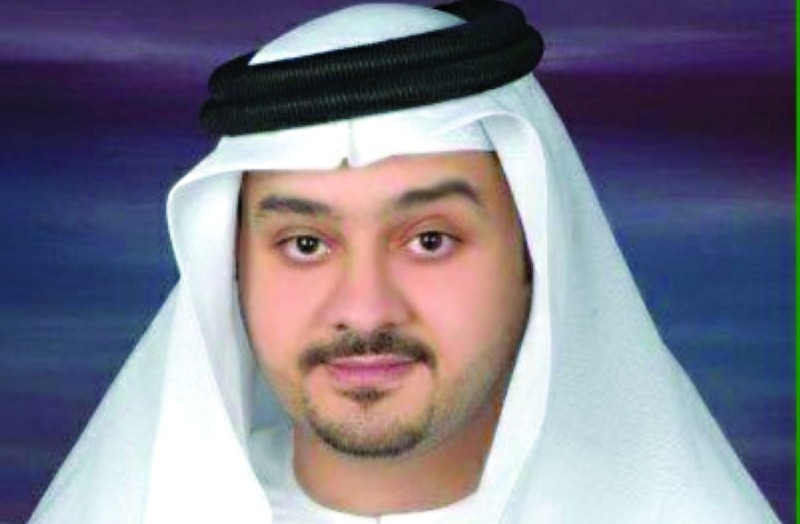
By Faisal AlShimmari, Head of ESG