



Agriculture is being reshaped by climate change. Droughts, floods, shifting weather patterns, and soil degradation are disrupting food systems and threatening livelihoods across continents.
Farmers, researchers, extension agents, and policymakers face a shared challenge: access to reliable agricultural knowledge. The data needed to adapt to changing conditions exists, but it is scattered, inconsistent, and often inaccessible to the people who need it the most.
Now, through artificial intelligence, we have a way to bridge this data gap.
In December, we released AgriLLM, an open-source Large Language Model trained on specialist agricultural data.
Led by the International Affairs Office at the UAE Presidential Court, the AgriLLM initiative is an international partnership that includes the Gates Foundation, CGIAR, EMBRAPA, FAO, IFAD, the World Bank, and ECHO, alongside leading universities and agricultural research centers. ai71 is the AI partner for this effort, helping build a model that is globally accessible, locally relevant, and equitably shared.
Why Agriculture Needs Its Own AI
General-purpose AI models have transformed how we interact with information, but agriculture demands a higher level of precision. Farming conditions differ dramatically across regions, crops, climates, soils, and socio-economic contexts.
Without domain-specific training, these generic models risk producing guidance that is incomplete or inaccurate. For farmers, such inaccuracies can have real consequences, affecting yields and livelihoods.
AgriLLM is purpose-built to address these challenges. Trained on more than 150,000 agricultural data samples sourced from data contributed by 15+ global partners, our model embeds deep scientific, policy, and field-level expertise.
This level of specialization enables AgriLLM to deliver grounded, context-aware insights that support better decision-making across the agricultural value chain. Additionally, a domain-aware model delivers far stronger results when combined with additional tools (e.g. RAG), unlocking a robust pipeline of downstream applications.
Closing the Language Gap in Global Food Systems
Agricultural knowledge only creates value when it can be understood and applied. Yet much of the world’s farming advice is published only in more popular languages like English, leaving many communities excluded.
To address this, we anchored AgriLLM on multilingual base models. We fine-tuned one version on Llama to serve eight major global languages, and another on Qwen to extend coverage to more than 100 languages and dialects.
By starting with models designed for linguistic diversity and enriching them with domain expertise, AgriLLM ensures that critical agricultural insights are not confined to a single language or geography but are accessible where they matter most.
Demonstrating AI for the Field
For the launch, we also developed and presented four agentic AI assistants to demonstrate how the AgriLLM model can be transformed into tools that serve real agricultural needs. Each assistant interprets information through the lens of its user. Farmers receive practical guidance they can act on immediately. Extension agents see deeper technical insights to support fieldwork. Researchers access structured, evidence-based knowledge. Policymakers are provided with concise summaries to inform long-term planning.
These assistants are proof points to illustrate how AgriLLM can enable the development of locally relevant applications that strengthen productivity, resilience, and food security when delivered in the right form and context.
Open Source for Global Collaboration
From the beginning, the mission behind AgriLLM was to empower the broader agriculture community. By releasing it as open-source, we are enabling governments, research institutions, startups, and nonprofits to adapt and extend the model for their own local or commercial needs. This ensures that agricultural innovation is shared and inclusive, supporting public good outcomes. AgriLLM can be downloaded, fine-tuned, or integrated into new applications through our open release on Hugging Face, complete with technical documentation and evaluation tools.
A Foundation for the Future
AgriLLM is just the beginning, a demonstration of how applied AI can support complex, high-impact domains.
As part of this broader direction, CGIAR has recently announced the CGIAR AI Hub in Abu Dhabi, an initiative designed to harness more than 50 years of scientific expertise from CGIAR’s 13 international research centers.
ai71 is supporting the Hub as a core AI partner, contributing the technical capabilities to ensure that advances in research translate into AI systems that are usable, scalable, and relevant in real-world settings.
Ultimately, the true measure of applied AI is not novelty, but impact, whether it improves decision-making, strengthens resilience, and helps institutions and communities respond to changing conditions. AgriLLM offers one example of what becomes possible when AI is built with that purpose in mind.
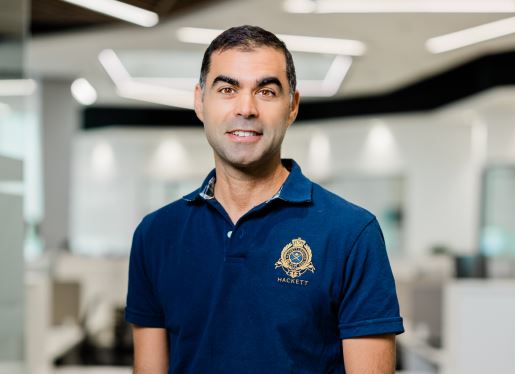
By Mehdi Ghissassi, Chief Product & Technology Officer, ai71