



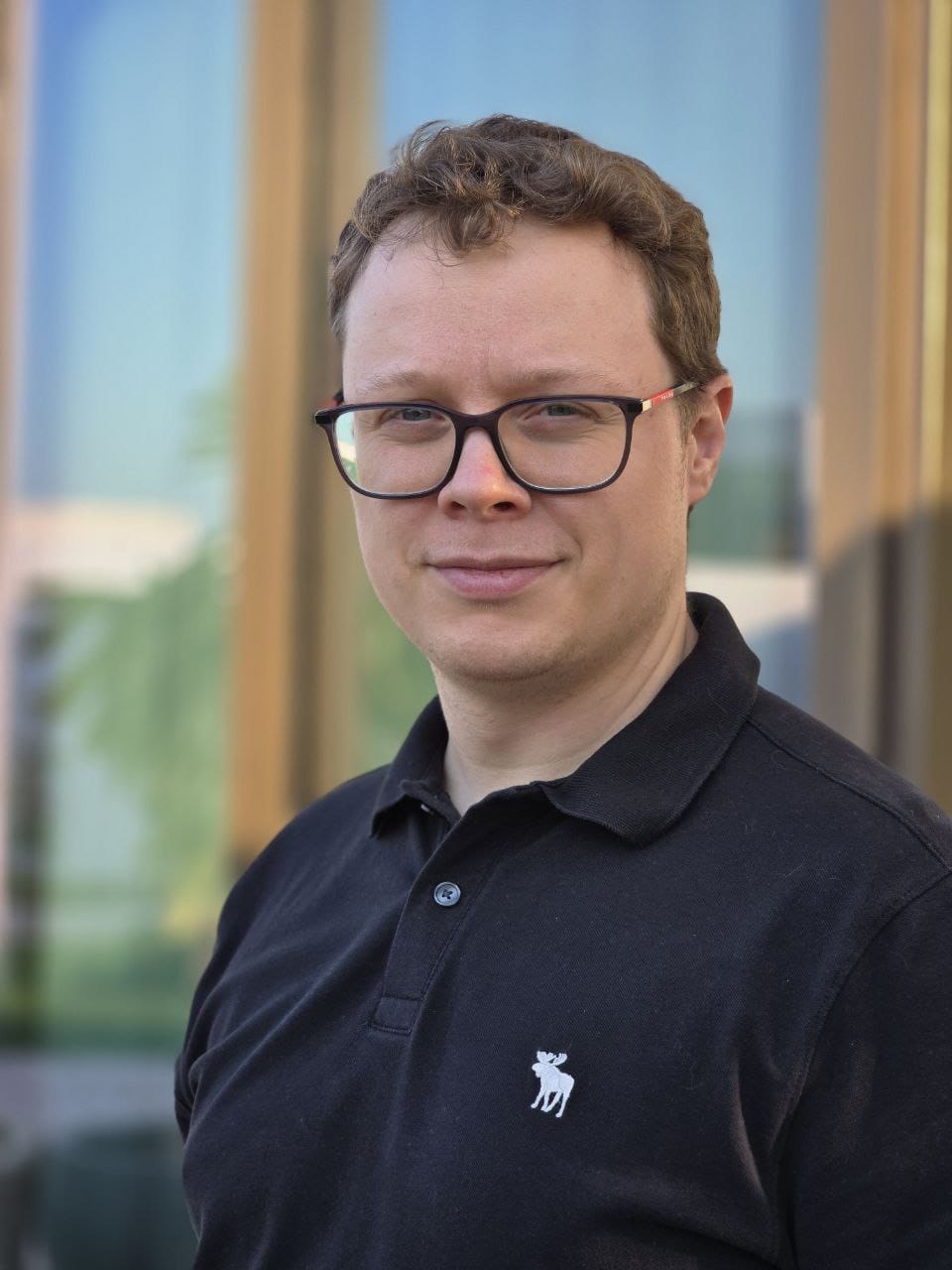
When the attacks on the UAE began earlier this year, we were advised to stay at home. Overnight, my house in Abu Dhabi turned into a small, chaotic school. I had five kids trying to manage remote classes, homework, and the frustration of being unable to play outside, not least because the reality of regional conflict had reached our doorstep. As a father and husband, I had no choice but to stay calm and be resilient for them.
I carry a similar duty of care toward my company and my team. When you build a startup and invite people to walk with you on that journey, you owe them more than vision. You owe them systems that protect them, resilience as an operating principle, and a business that does not collapse when people are under pressure.
Automate the backbone
In times of crisis, it is human to experience stress and take family wellbeing and safety as a natural priority. Crises also restrict mobility and fracture supply chains. When airspace closes, logistics falter and teams are scattered across time zones, the only businesses that remain fully operational are those with a digital nervous system – a structure where software, RPA, and AI agents carry the cognitive load that once depended on people.
Lead from anywhere
The ability to lead remotely is a strong addition to a resilience requirement. Thanks to AI agents, tasks that once demanded a full workstation can now be executed from a phone. They can monitor operations, trigger workflows, and make routine decisions without waiting for human intervention. During the 2010 volcanic eruption in Iceland, Norway’s Prime Minister Jens Stoltenberg famously governed his country from his phone while stranded in New York. Sixteen years later, this level of remote leadership is no longer exceptional. A leader should be able to run their company from an airport lounge, a hotel room, or a transit zone. If they cannot, the business is not resilient.
Distribute your team
Distributed teams amplify this resilience. When one team member must focus on home-schooling during a lockdown, another in a different time zone can take over. Geography becomes a shock absorber. A startup’s “brain”, its decision-making systems and digital infrastructure must be able to operate from anywhere in the world.
Put robots in harm’s way, not people
But the most profound transformation is happening in the physical layer of business: production, maintenance, and operations. Robotics has become a shield against operational fragility. Robots do not fear missiles, do not experience fatigue, and do not need to evacuate during emergencies. Fully robotic, lights-out production lines eliminate the need for human presence in hazardous environments. In times of crisis, people naturally prioritise their families and safety. Machines do not. Delegating dangerous or routine tasks to automated systems is not just an efficiency decision. It is a human-protection strategy.
Base your startup in a digitally mature country
This is one of the reasons I relocated from Europe to the UAE. The region’s digital maturity, fast bureaucracy, and national commitment to automation contribute to an environment that fosters resilience. In global instability, jurisdictions with strong digital infrastructure outperform those relying on slow, manual processes. A startup built in a digitally advanced ecosystem has a structural advantage: it can adapt faster, automate deeper, and decentralise more effectively.
Diversify the economy through intelligent manufacturing
The UAE’s GDP still relies heavily on two flows that are deeply vulnerable to logistics disruption: hydrocarbons and tourism. Both depend on open sea lanes and functioning civil aviation is exactly the infrastructure that shuts down during pandemics and military escalation.
Industry 5.0 – a smart, robotised manufacturing, human-centric in design, autonomous in operation – offers a structural hedge. Domestically deployed intelligent production can serve local demand continuously and take advantage of windows of stability for international shipments. Unlike oil extraction or hotel occupancy, a lights-out factory does not stop when airports close. And unlike legacy heavy industry, modern robotic manufacturing can be built with minimal environmental footprint and genuine attention to human wellbeing.
For the UAE, this is not just an economic diversification play. It is a national resilience strategy.
Treat sustainability as security
Energy volatility adds another layer to this equation. With supply routes threatened and prices rising, energy efficiency has shifted from a sustainability talking point to a survival strategy. At OneSun, our goal of reducing electricity consumption of industrial robots by up to 50% is no longer just about environmental responsibility – but national and commercial security. The “green agenda” in the Middle East is evolving from an image project into a defensive one. Reducing dependency on volatile fuel markets is now a resilience imperative.
Start by auditing your single points of human dependency – every task that stops when one person is unavailable is a vulnerability.
The strongest startups of 2026 will be those built on systems rather than stress, automation rather than improvisation, and decentralisation rather than dependency. Resilience is not about weathering a storm – but operating even if storms never end.
By: Dmitrii Gartung, Founder and CEO of OneSun