



Businesses operating in high-risk environments need to accept a baseline of uncertainty. Whether operations take place in a volatile geopolitical environment, regions experiencing persistent civil unrest or locations that experience periodic or regular terrorist activity, escalations pose immediate challenges. The lack of information in the early hours of an incident is quickly overshadowed by rumours and misleading narratives that drown out the facts. For businesses, a key challenge is to separate verified information from the noise that may lead to disruptions in operations and threats to employee safety.
Addressing the threat of misinformation means understanding the dynamic behind it, especially during a rapidly evolving environment or escalation. The moment a geopolitical event or an escalation occurs, an information vacuum opens up that is filled with rumours and false information, whether accidentally (misinformation) or deliberately (disinformation) to support a certain narrative. These rumours, for example on social media, are quickly generated because the senders don’t need to verify the information before circulation; they are often alarmist in nature and use urgent language triggering emotional reactions. In contrast, verified information needs to be based on reliable sources and blend updates from government channels, aviation trackers, intelligence feeds and vetted news organisations.
Even with a strong verification method, uncertainty will remain, especially in high-risk environments where immediate responses are more critical than in lower-risk environments. Businesses can’t predict every regional shift or escalation, but they can maintain internal processes to shift from reactive actions to a proactive framework.
Businesses must establish an analytical baseline using pre-approved sources to validate incoming information under one defined authority. This includes the utilization of open-source intelligence tools with human oversight to not only verify but filter information and data. Only then can leadership manage uncertainty in high-risk or rapidly evolving environments. Verified information sources are diplomatic and government channels, aviation and maritime authorities, civil defense services, vetted news providers or threat intelligence platforms. Sources for misinformation are social media posts using old footage for current developments that looks authentic, alarmist news on imminent shortages, fabricated official documents, and deepfakes.
Filtering out information requires discipline. Every piece must pass a stress test to identify the true source, determine its incentives, and confirm the data independently. Getting the right information is only half the battle. Leadership must also act on it without letting emotion or assumption take over. The most effective way to manage that uncertainty is by relying on quantifiable triggers established before the incident. When a viral post claims an airport is under attack, an organization shouldn’t scramble. Instead, the focus must shift to hard metrics, such as a NOTAM (Notice to Air Missions) from the civil aviation authority confirming they are closing the airspace or a definitive change in an embassy travel advisory. In volatile environments like Beirut, explosions in the southern suburbs can easily lead to false information being shared about disruptions to Lebanon’s airport in southern Beirut.
Tying the operational response to quantifiable predefined triggers shifts the organization from reacting to the unknown to executing a deliberate plan. In the case of the explosion in Beirut, instead of panicking, and acting upon unverified and potentially wrong information, operational triggers could be other aviation indicators (e.g. announcements from airlines), or government channels (increased travel advisories from US OSAC or UK FCDO). Predefined actions linked to these triggers can facilitate timely decision-making and support when determining whether to move or to stay put, especially in rapidly evolving environments. If the thresholds for an overland evacuation have not been met or the data shows that moving is currently the most dangerous option, and the crisis team relies on quantifiable triggers, they can promptly decide not to authorise an evacuation, and instead execute a strict “shelter-in-place” posture while monitoring the situation.
To prevent employees from making isolated, unsafe decisions out of fear, organizations must position itself as a source of truth. This is particularly important in high-risk and rapidly evolving environments. Communicating early and establishing a regular cadence, even if it is only by an internal message stating, “We are monitoring the situation; there is currently no change to our security posture, and we will update you in x hours,” provides important stability and reassurance.
Businesses can verify information, manage uncertainty, and protect their people when operating in high-risk or rapidly evolving environments by establishing a framework to filter and prioritise information with human oversight and tie it to predefined triggers to avoid making decisions based on false assumptions or emotional reactions.
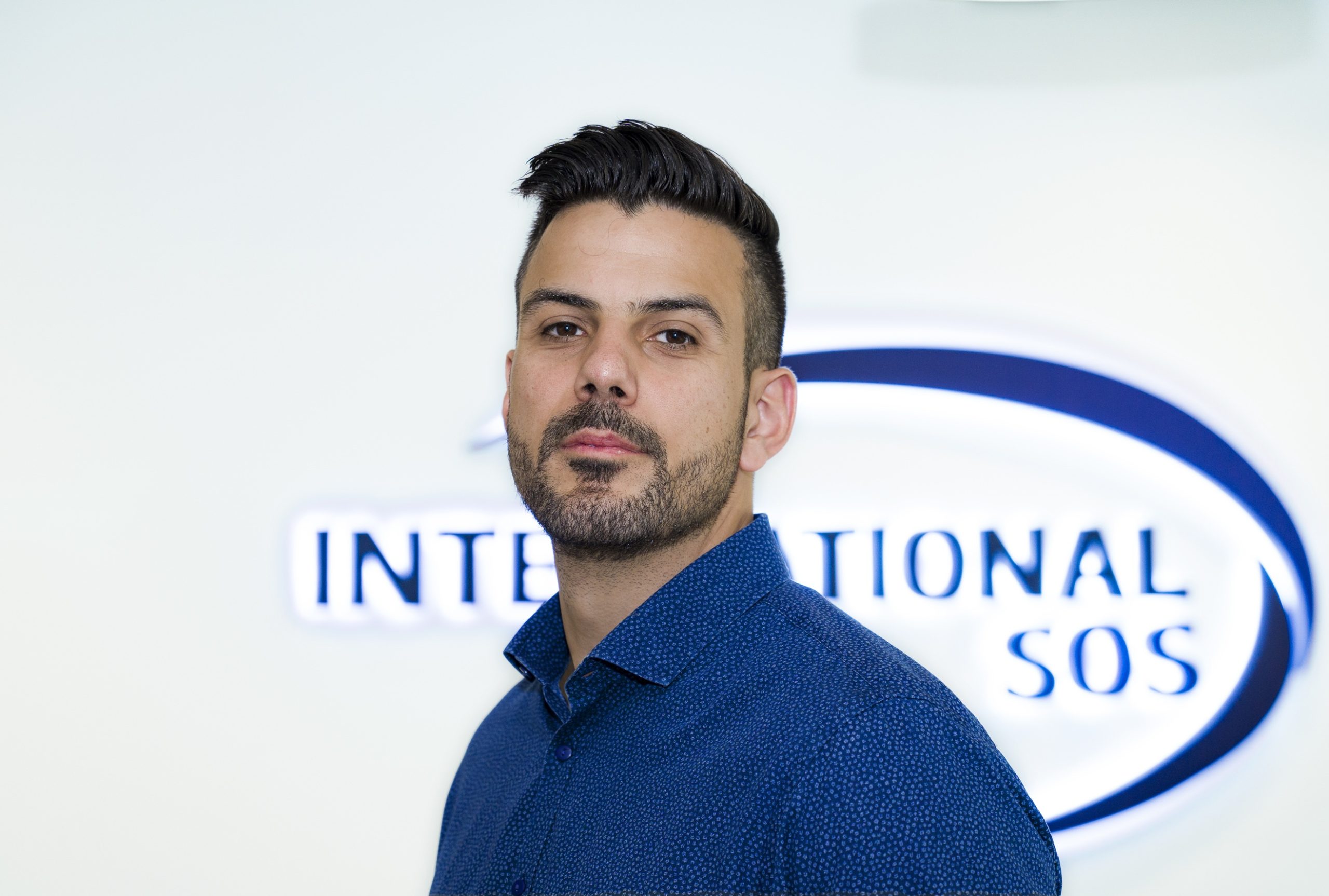
By Michael Tutte, Regional Security Manager, Middle East, International SOS