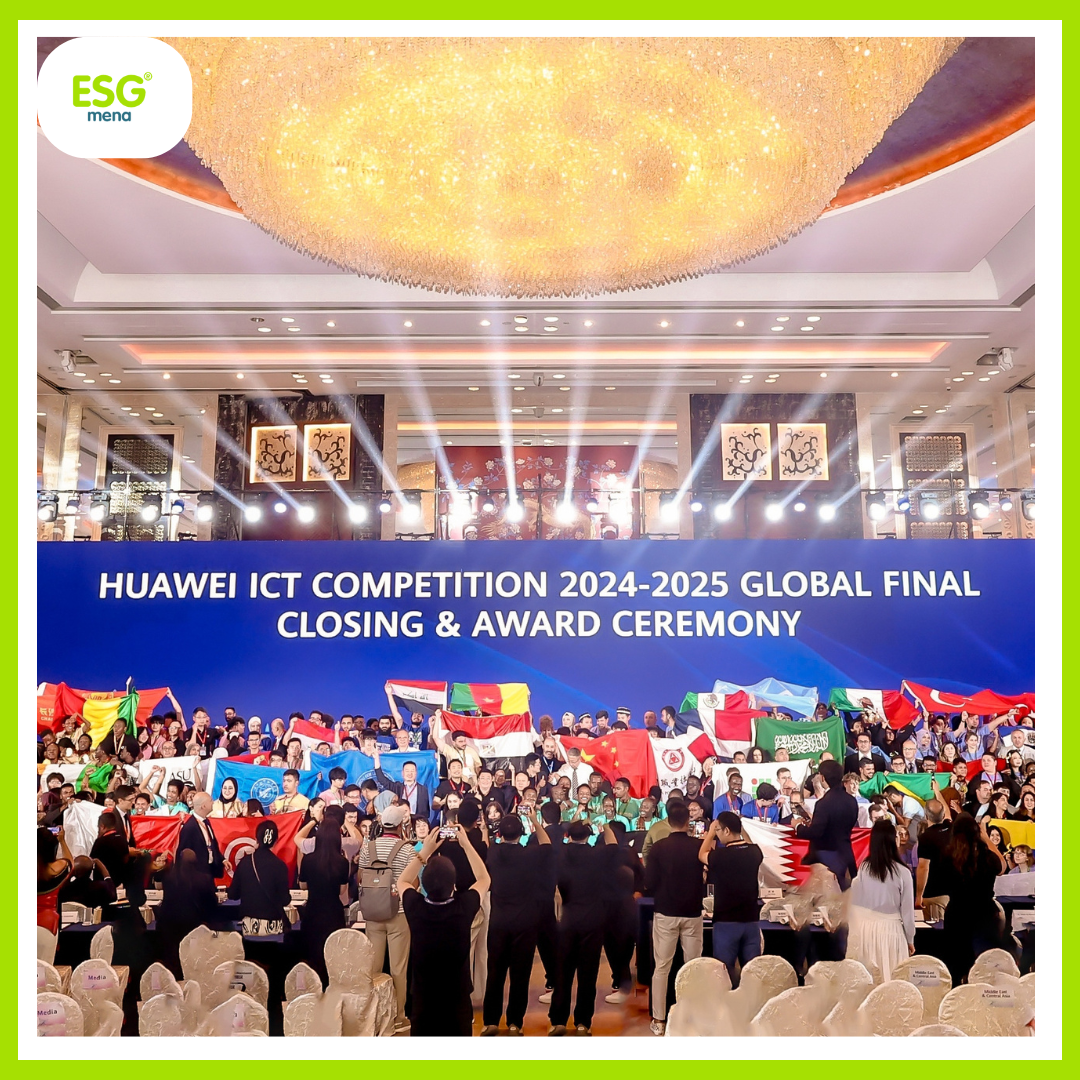
Huawei ICT academy steers PPPPs as 4M new ICT jobs loom by 2030
Throughout its presence in the region for over 20 years, Huawei has unwaveringly nurtured ICT knowledge and skills at the grassroots levels, extending global expertise to the local communities across the emerging Middle East region, reaching new milestones built based on public private people partnerships. By 2025, Huawei ICT Academy established partnerships with over 330 schools in the Middle East and Central Asia region, benefiting over 500,000 students.
With very bullish and forward thinking national and regional AI strategies, the Gulf region is firmly committed to establishing itself as the globe’s focal point for AI benefiting from its strategic central location, renowned visionary leadership with the UAE having the world’s first AI minister, agile policies aligned with the world’s finest, a strong focus on human development, and a clear capital strategy in place reflected by dedicated AI educational institutions, R&D centers, startups incubators and talent development centers leading all the way to establishing the world-s finest AI ecosystem.
Surprisingly, the region’s females stand out, committed to reversing all odds with very strong contributions to ICT developments, represented by active participations and partnerships, such as a transformative partnership fueling the high ambitions of a new generation of female leaders in technology. Princess Nourah Bint Abdulrahman University (PNU), the largest public women’s university in the world, joined forces with Huawei to bridge the digital talent gap and empower women to become architects of the digital futur,e directly supporting the human capacity development pillar of Saudi Arabia’s Vision 2030, equipping Saudi women with the cutting-edge skills needed to thrive in a knowledge-based economy. In fact, this is another reflection of Huawei’s commitment to ICT development in Saudi Arabia, whereby the capital Riyadh hosts the Huawei Future Space. This all comes as data shows more than half of the new ICT human talents in the region emerge from the female gender.
To outline Huawei’s ICT skills development efforts, HUAWEI CONNECT 2025, Huawei, UNESCO IITE, IDC, OpenAtom Foundation, and Global Intelligent IoT Consortium jointly released the whitepaper ICT Job Roles and Skills in the Intelligent World at the Global Education Summit, with clear, promising findings cementing the Gulf region’s strong AI pioneering plans and strategies.
36 Million new ICT jobs need to be filled globally in the coming 4 years – 4 of which are in the Middle Eas,t comprising 12% of the whole globe, again enticed by the region’s exemplary AI vision. In fact, the Gulf region, notably the UAE and Saudi Arabia are true magnet for talent with nominal taxes, smooth remote/freelance visas, easy funding, safety and stability, and a vibrant scene of top-notch ICT / AI events throughout the year.
The top three skills most urgently needed are: cybersecurity (56.1%), AI application development (45.3%), and cloud development (42.6%) amid a severe shortage globally and regionally. This adds up the pressure as the UAE public sector accelerates the deployment of Chief AI Officers at all key governmental & semi-gov bodies.
The paper also highlights major concerns regarding AI transformation, including a lack of critical skill sets (33%); disruption of traditional management responsibilities (31%); and managing fears of job displacement (28%). In this regard, a pressing need of expanding ‘Hybrid’ cross-functional roles relaying skills broadly, including risk. Governance structures, with AI fluency becoming a core competency across all job functions, even non-technical ones, as the AI policies framework comes into effect, being in EU or in the GCC, where governments work round the clock to mitigate risks.
With half of all organizations report a misalignment between university curricula and industry needs whereby graduates often lack core technical skills, data analysis capabilities and critical thinking skills, Huawei ICT Academy through its bold partnerships particularly in the Gulf region presents a golden opportunity to link the dots across all stakeholders offering to the local job market a major upgraded democratized version of ICT skills blending the world of academia, research centres and the real professional world with all the required skills for the workforce. Organizations that proactively address skills gaps, modernize their learning strategies and foster a culture of continuous adaptation will be best positioned to harness the full potential of AI. The future belongs to those who can blend technical expertise with human-centric skills—creativity, empathy, and ethical judgment—to navigate the complexities of the intelligent world.
While many link AI to job losses, the potential is crystal clear with 4 Million jobs pop to the job table in the Middle East. Undoubtedly, the accelerating integration of AI and advanced ICT systems is reconfiguring business models and operations. As organizations contend with persistent skills shortages and the imperative for ongoing technological reinvention, the need to proactively cultivate AI-ready competencies is more urgent than ever. These shifts demand both structural and cultural change, positioning learning and adaptability as core pillars of organizational success. Against this backdrop, attention must now turn to the emergence of new roles and the critical skills that will define the age of AI. ‘Hybrid’ multi-tasked roles is KEY, strong governance and risk assessment surface as the necessary safety net for all.
Huawei remains laser focused on human development a region-specific program for Middle East with the launch of its groundbreaking “T.H.E. GOLD Talent” program in collaboration with the UNESCO Institute for Information Technologies in Education (IITE), which aims to transform higher education and foster the digital intelligence talent pool across the Middle East and Central Asia region to cope with requirements of the AI Era with the clear commitment to cultivating an additional 1 million digital and intelligent talents in the next 10 years.